The Bears
The seated bear represents the defining quality of the House: not aggression, not conquest, but presence. Its formal yet gentle posture embodies the Silent Vigil.
From the archives of the House of Twiggleigh-Foote
An ancient and honourable house, a very long memory, and a coat of arms whose details have accumulated through generations of bears who were not inclined to throw anything away.
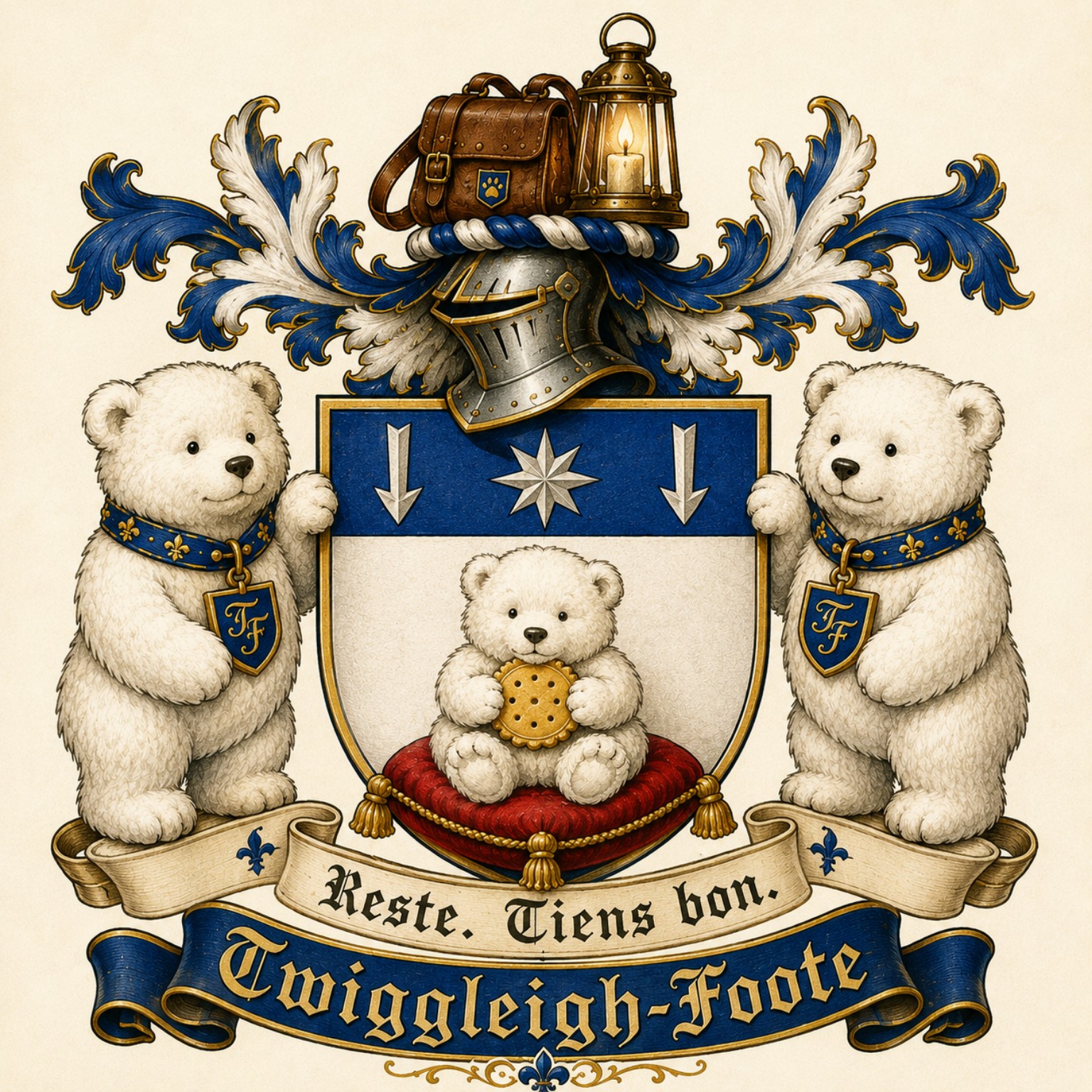
The arms of the House
The coat of arms of the House of Twiggleigh-Foote gathers together the symbols, colours, traditions, journeys, and quiet duties of the family.
The formal heraldic description appears below, followed by a plain-English explanation for visitors who were not raised by heralds.
Formal heraldry
Argent, upon a cushion gules, a small bear sejant proper, maintaining a biscuit or; upon a chief azure, a star of steadfastness between two arrows inverted argent. Supporters: two white bears regardant. Crest: a lantern lit beside a traveller’s satchel.
For the rest of us
The arms of the House of Twiggleigh-Foote are a record of steadfastness, companionship, vigilance, hospitality, and quiet courage. The white field recalls the original coat of Monsieur Le Twigg; the red cushion represents warmth, friendship, and safe journeys completed; and the seated bear reflects the Silent Vigil — presence without aggression.
Above, the blue chief represents loyalty beneath open skies. Its star stands for guidance in uncertain times, while the inverted arrows commemorate the belief that watchfulness can change history.
The seated bear represents the defining quality of the House: not aggression, not conquest, but presence. Its formal yet gentle posture embodies the Silent Vigil.
Argent — silver or white — represents steadfastness, quiet courage, and the original white coat of Monsieur Le Twigg. Azure represents loyalty and steadfast travel beneath open skies, while gules recalls warmth, companionship, and the hearth.
The lantern represents guardianship, watchfulness, and the duty to remain beside companions through uncertain or difficult times. It is the light kept burning when the road ahead is dark.
The satchel represents journeys, companionship, and the long tradition of Twigglys travelling discreetly with those under their care — in saddlebags, coat pockets, sea chests, glove compartments, and passenger seats.
The golden biscuit represents shared comforts, hospitality, morale during adversity, and emergency provisions during campaigns, storms, and long journeys. It recalls the ancient Honey & Biscuits Charter, which holds that biscuits are best when divided fairly — except in circumstances of exceptional hunger.
The crest shows a lantern lit beside a traveller’s satchel, symbolising guardianship of journeys, watchfulness through the night, and the duty to remain beside companions wherever they may roam.
The House motto
Stay. Hold fast.
The motto expresses the oldest duty of the House: remain present, remain steady, and do not abandon those who depend upon you.
Recorded in lesser branches
Never Alone.
Used briefly by the naval branch during the age of sail.
Small but Steadfast.
Favoured by Sir Henry Twigg of Leigh during the time of Edward the Black Prince.
An unofficial modern rendering of the House philosophy. Technically non-heraldic. Widely beloved.
The unwritten law of the House
Wherever someone is frightened, lonely, or facing a long road, a Twiggly should be nearby.
The present day
The House and its archives are presently in the care of Lord Panda de Woff, Fourth Earl of Twiggleigh-Foote, known to his friends as Mister Twiggly.